

Soil Health, Evidence, and Integration: A conversation with Dr Leigh Ann Winowiecki
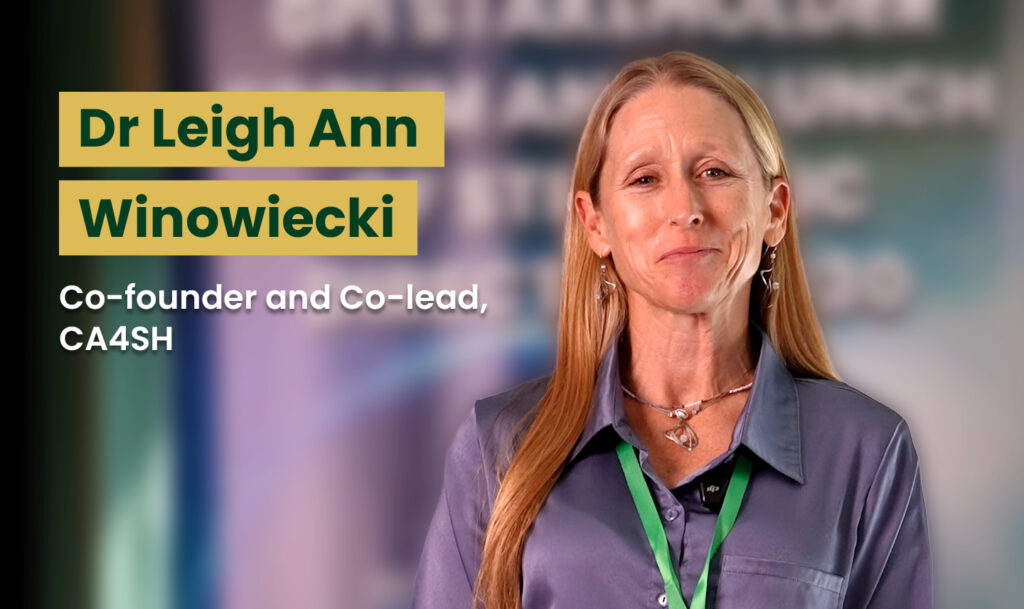
Leigh Winowiecki has watched soil science move from the margins to the center of global policy conversations — and she believes the moment calls for both urgency and rigor.
A soil scientist and Global Research Lead for Soil and Land Health at CIFOR-ICRAF, and co-founder of the Coalition of Action for Soil Health (CA4SH), Dr. Winowiecki brought a systems perspective to the APPFS gathering. Her starting point was stark: with over 40% of the Earth’s surface degraded, she sees land restoration as a shared responsibility that transcends sectors and borders.
The good news, she noted, is that soil health has finally secured a place on the global agenda — including within Africa’s Comprehensive Africa Agriculture Development Programme (CAADP). And phosphorus, she argued, does not need to start from scratch. “Phosphorus can easily be integrated into existing initiatives,” she said, pointing to CAADP and the [Declaration] on fertilizers as ready entry points.
But integration without evidence is fragile. Ms. Winowiecki emphasized that generating robust data on the actual state of soil health is a precondition for more responsible phosphorus use and improved use efficiency — a view she said she shared with the International Fertilizer Association. The goal: leverage that data to shape both policy and practice.
Her longer-term message was directed at the next generation of soil scientists. For decades, the discipline operated in isolation, disconnected from restoration, food security, climate, and biodiversity agendas. That has changed. “Now we have a completely different understanding of the critical role of healthy soils,” she said — for the SDGs, for the three Rio Conventions, and well beyond.